
Worms Itineraries and Ideas: Explore at Your Own Pace
Worms is easy to experience without a plan, and that is exactly why a simple thread can help sometimes. Not as a checklist, but as a route for reading the city. It is compact enough to connect culture, memory, the Rhine, and green spaces through transitions that simply make sense.
These ideas are intentionally written without fixed times or ticket logic. You can shorten them, stretch them, or remix them as you go. Worms makes that easy. And very often, it is the spontaneous detours that stay with you.
The Classic Core: Cathedral, City Walls, Jewish Heritage
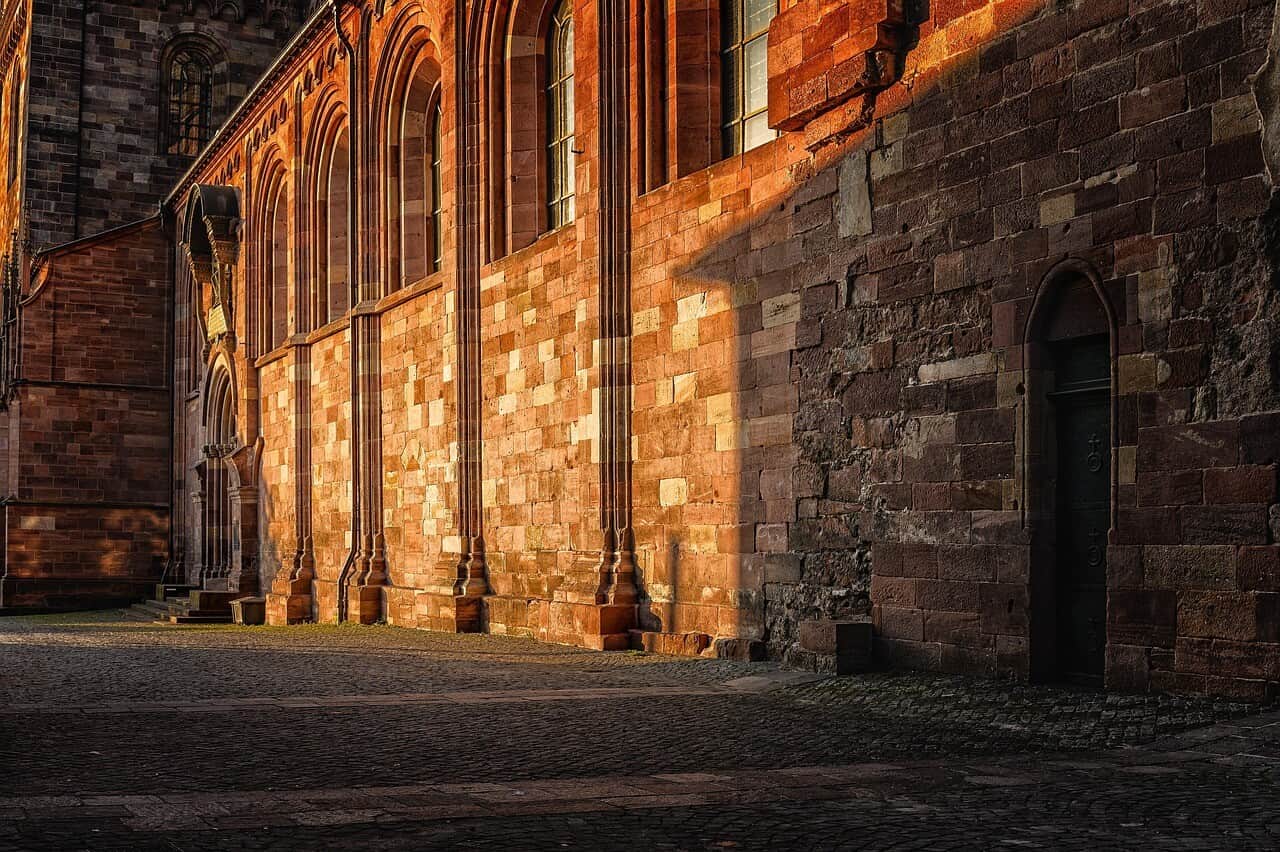
If it is your first time in Worms, start in the cathedral quarter. St Peter’s Cathedral gives you orientation, both as architecture and as a sense of space. From there, moving on to the traces of the city wall feels natural. Remains around the centre make the city easier to “read”, because they show where the edge of the old town once ran in a very literal way.
From here it also makes sense to include Jewish Worms. Worms is part of the UNESCO World Heritage SchUM Sites, with the Synagogue District and Holy Sand representing a tradition that makes Worms a European place of remembrance. This route feels rich, but not heavy, because everything sits close together.
Following the Nibelungen Trail: Siegfried in Town, Hagen by the River
If you want to experience Worms through its world of stories, set Nibelungen sites as your waypoints. The Siegfried Fountain in the centre is a strong starting point, anchoring the legend in the city space. From there, the route almost continues by itself, either through the centre towards the river, or straight to the promenade.
On the Rhine promenade you will find the Hagen Monument, recalling Hagen of Tronje and the legend of the Nibelung treasure said to have been sunk in the river. This transition is especially satisfying because it brings story and river together. You stand by the water and notice how strongly Worms tells myths through places.
From Culture to Green Spaces: Bürgerweide, the Zoo and Rhine Floodplains
If you want to switch deliberately from stone and history into something lighter, head south. Bürgerweide and the Rhine floodplains offer openness, paths, and water, an area that suits walks naturally and calms you down almost automatically.
Tiergarten Worms is also located within Bürgerweide, working well either as a family stop or as a destination in its own right. The advantage of this combination is simple: you do not have to choose between “doing something” and “being outdoors”. In Worms, both flow together.

Herrnsheim Palace Park
For a route that feels different, Herrnsheim is well worth it. There are marked paths that connect the palace grounds with the village area, ideal if you are looking for a calmer atmosphere away from the inner city. Herrnsheim works well as half a day, but also as a short loop. You can make the route exactly as long as it feels right.

Worms Is Best When You Do Not Rush It
All of these ideas share the same core: Worms is not a place you “complete”. The city works when you allow transitions, from the cathedral to a fragment of wall, from a lane to a square, from the square to the river, from the river into green space. That is its quality. It offers a lot without insisting on attention.
Worms in a Day
If you only have one day in Worms, you can still see a lot. The best place to start is in the city center around Worms Cathedral, then stroll through the old town. Afterward, a walk toward the Rhine is worthwhile – perfect for a short break with a view. To round off the day, a cozy restaurant in the city center or by the river is ideal.
Worms at the Weekend
A weekend in Worms is ideal for combining city life, the Rhine, and culture in a relaxed atmosphere. On the first day, you can visit the cathedral, the old town, and the main sights. On the second day, you can take time to enjoy the Rhine, take scenic walks, or explore the surrounding area. This leaves plenty of room for enjoyment, relaxation, and a bit of stress-free exploration.