
Culture & History in Worms: Cathedral, Luther & SchUM Sites
Worms is a city where culture does not rest neatly on the surface. It runs beneath everyday life as memory, architecture, names and routes. If you are looking for things to see in Worms, you will quickly notice that the fascination does not lie in a single landmark, but in the connections between them. Periods of history do not line up politely here. They overlap.
On this page you will find the most important historical threads, told in a way that unfolds naturally as you walk through the city. Around the Cathedral quarter, along the old city walls, through the Judengasse and at the places where Worms touches European history.
The Imperial Cathedral: Romanesque architecture that sets the rhythm
St. Peter’s Cathedral is Worms’ defining landmark and also a key to reading the city. As a Romanesque imperial cathedral, it belongs to the most important creations of Romanesque church architecture along the Rhine. What’s just as striking is its deeper layer: its origins reach back into early Christian times. Around the early bishops begins a development that positioned Worms as a spiritual and political centre.
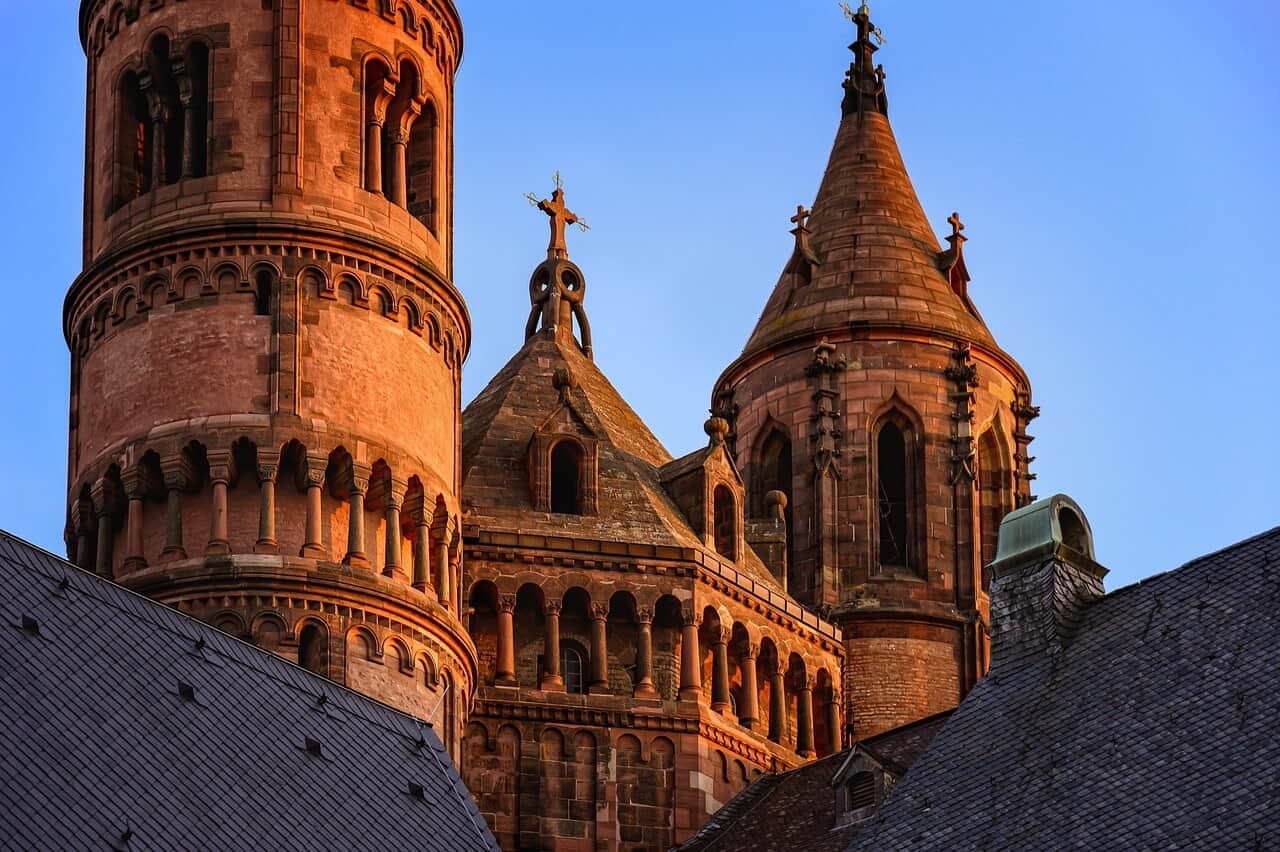
Standing in front of the cathedral, you do not simply see architecture. You sense a kind of orientation point for the entire city. Many paths and sightlines feel as though they were drawn towards this place or shaped by it. Here, stone becomes a form of storytelling that feels calm, monumental and surprisingly precise.
City walls and the edges of the old town
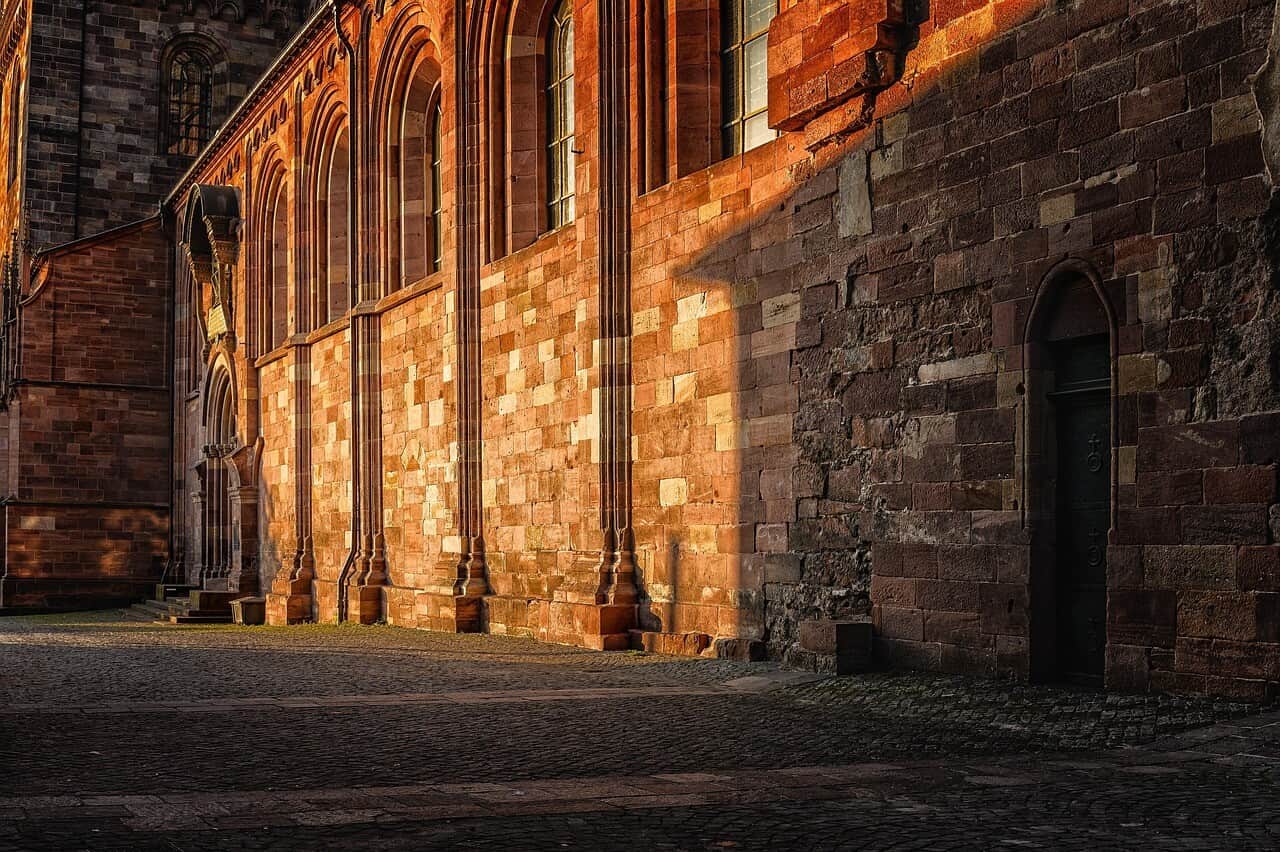
Worms tells its history not only in height, but also in width. Around the historic centre, you repeatedly come across remains of the medieval city wall. Particularly evocative is the knowledge that fortifications already existed here in late Roman times, shaped by periods of uncertainty. What later survived as medieval defences therefore rests on much older foundations.
These remnants are not simply decorative. They mark transitions between the old town and quieter streets, between openness and protection. Often, they lead directly to places where Worms’ layers come together, such as the Judengasse, where city history, Jewish heritage and everyday urban life are closely intertwined.
SchUM World Heritage and Jewish Worms
Another essential thread of Worms’ identity is its Jewish heritage. Worms is one of the historic SchUM cities together with Speyer and Mainz. This medieval network stands for Jewish scholarship, religious life and European cultural history. In 2021, the SchUM sites were recognised by UNESCO as World Heritage.
In Worms, this designation includes in particular the Synagogue District and the Old Jewish Cemetery known as Holy Sand. History here is not only something you see, but something you feel as atmosphere, as memory and as a quiet resistance against forgetting. Anyone who visits these places understands Worms not simply as a city with history, but as a city that carries responsibility for remembrance.
A Luther city and a place of European remembrance
Worms is also a key location in the history of the Reformation. The Diet of Worms in 1521, inseparably linked with Martin Luther, marks a turning point whose impact reaches far beyond the region. In the city, this moment is not treated as a distant chapter. It remains present in monuments and in the urban landscape.
One of the most striking symbols is the Luther Monument, a monumental ensemble that anchors Worms as a Luther city in public space. Even during a simple walk through town, you encounter a history that shaped Europe and continues to define Worms as a place of remembrance.
Holy Sand and visible time
The Old Jewish Cemetery Holy Sand is not a place you simply visit. It is a place that stays with you. In Worms, it is one of the central sites of Jewish history along the Rhine and part of the cultural memory that gives the city significance far beyond the region. Walking here, it quickly becomes clear that this is not about a single era, but about long continuities and the way remembrance is preserved within a city.
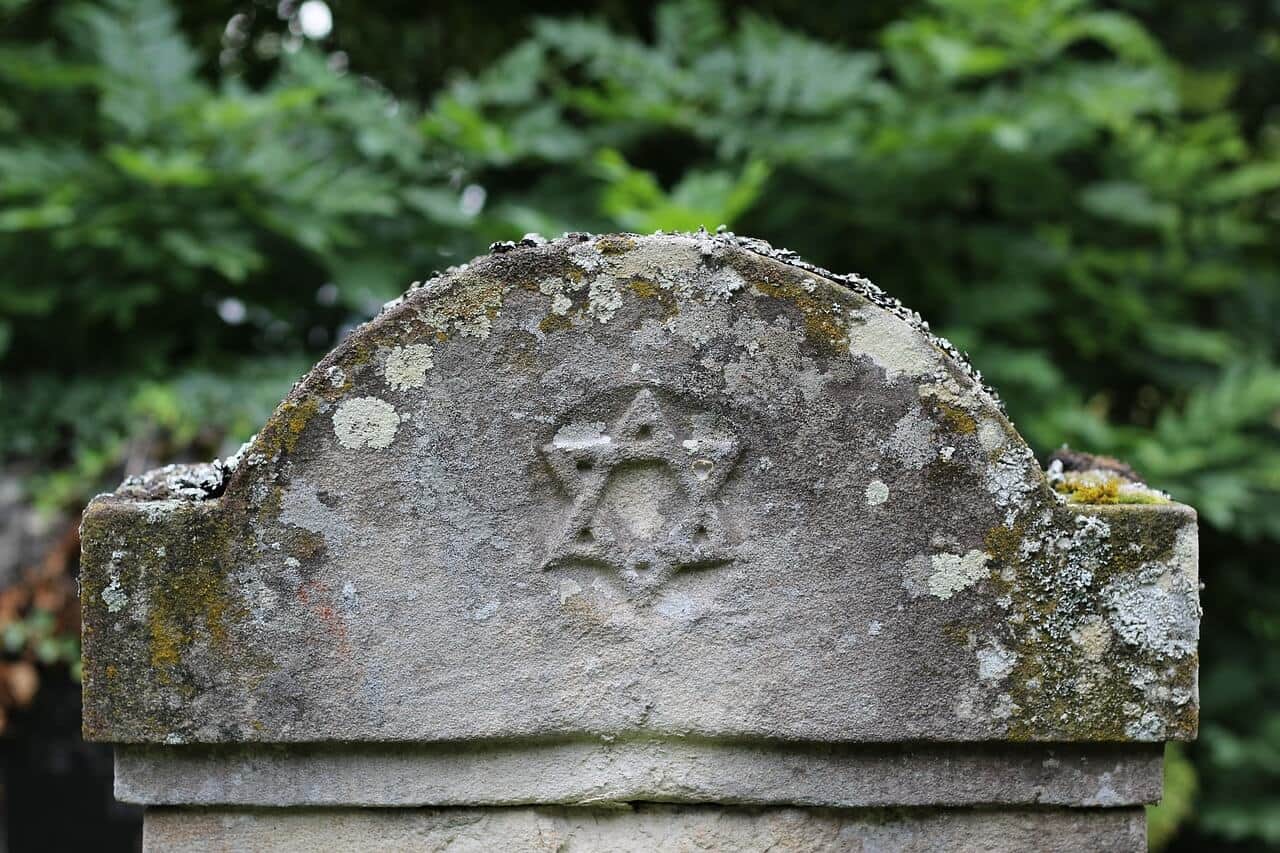
The cemetery’s power lies in its quiet clarity. Gravestones, names and forms feel like an open archive held in daylight rather than stored away. Precisely because the place does not explain itself loudly, it speaks with great intensity about belonging, loss and what is carried forward across generations. Holy Sand adds another depth to Worms, one defined not by monumentality, but by meaning.
Synagogue District and Judengasse
Worms is not only a cathedral city and a Luther city. A decisive part of its identity lies in its Jewish heritage, in places that feel serious rather than decorative. The Synagogue District and the Judengasse are more than historical backdrops. They are among the most formative spaces in which Worms can be experienced as a SchUM city.
Here, urban history is not made only of stone, but of what people carried, shaped, preserved and passed on over generations. The impact comes from proximity. Routes, buildings and memory sit so close together that you do not move from one sight to the next. You step into a coherent context.
The Synagogue District stands for religious life, scholarship and community history. The Judengasse shows how deeply this heritage belonged to the city, right at the heart of its urban fabric. This matter of fact closeness gives the place its strength. Worms does not feel like a city displaying the past, but like a city taking responsibility for it.
Liebfrauenkirche and the spirit of Rheinhessen
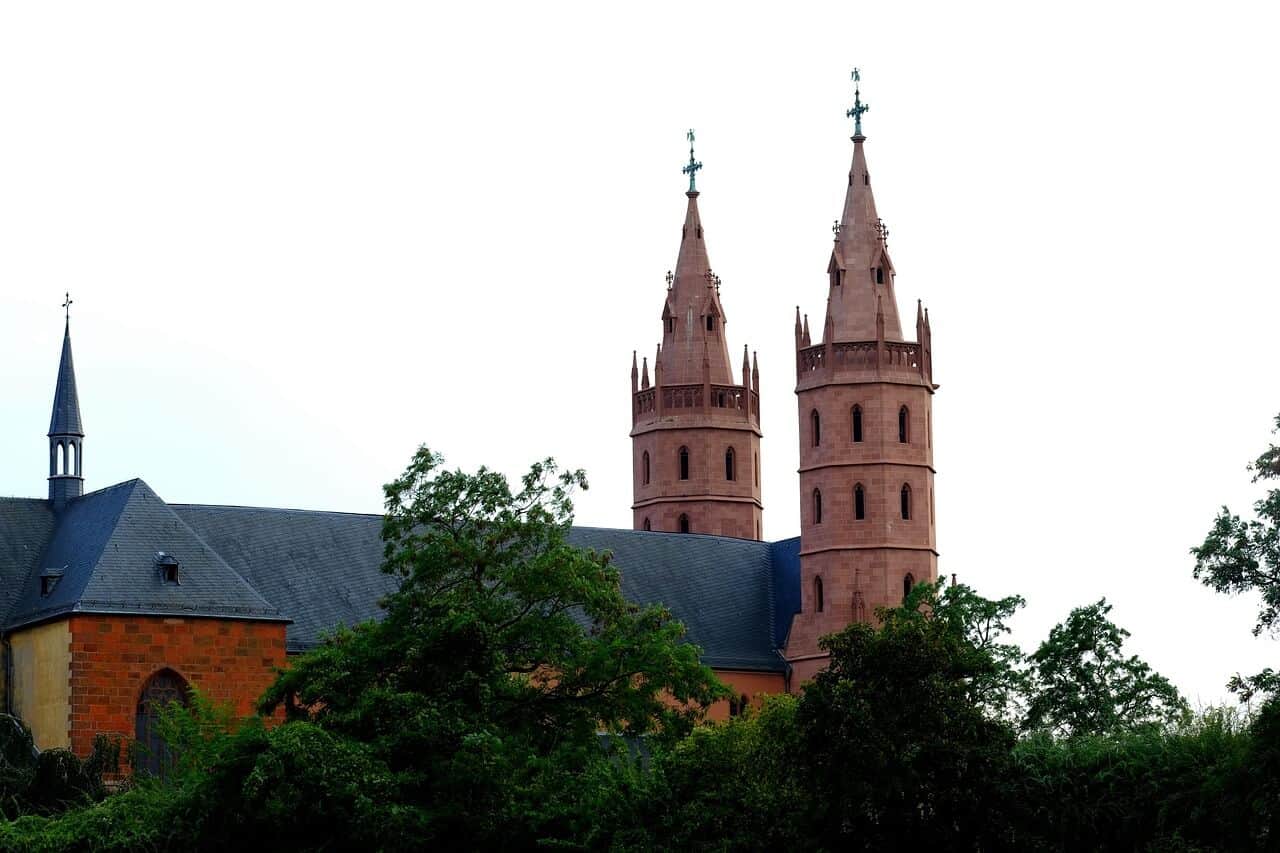
Worms is a city, but it is also part of a wider region. You notice it in the light, in the views across the surrounding countryside and in the way wine exists here not as an attraction, but as a cultural backdrop. In this story, Liebfrauenkirche occupies a special position as a landmark in the cityscape and as a reference point for traditions that connect Worms with Rheinhessen.
When people speak about wine in Worms, they rarely mean only a drink. They mean a way of life shaped by conversation, seasons, craftsmanship and landscape. Liebfrauenkirche makes this layer visible. Stone meets countryside. City meets region. To understand Worms, you begin to notice exactly these connections. Quiet, precise and often revealed by a small detour that shows how deeply the city is tied to its surroundings.